
Case study · Glasgow
Full rear garden rebuild in Glasgow
A waterlogged and overgrown back garden stripped to bare ground, re-fenced on all sides, then rebuilt with a sandstone patio, gravel and raised planting beds.
Glasgow
Full rear garden rebuild
A waterlogged and overgrown back garden stripped to bare ground, re-fenced on all sides, then rebuilt with a sandstone patio, gravel and raised planting beds.
Read the case studyAt a glance
The job in short
- Location
- Glasgow
- Work
- Full rear garden rebuild
- Boundaries
- Close-board fencing on all sides
- Patio
- Riven Indian sandstone, charcoal block edge
- Beds
- Two raised block-edged planters
- Kept
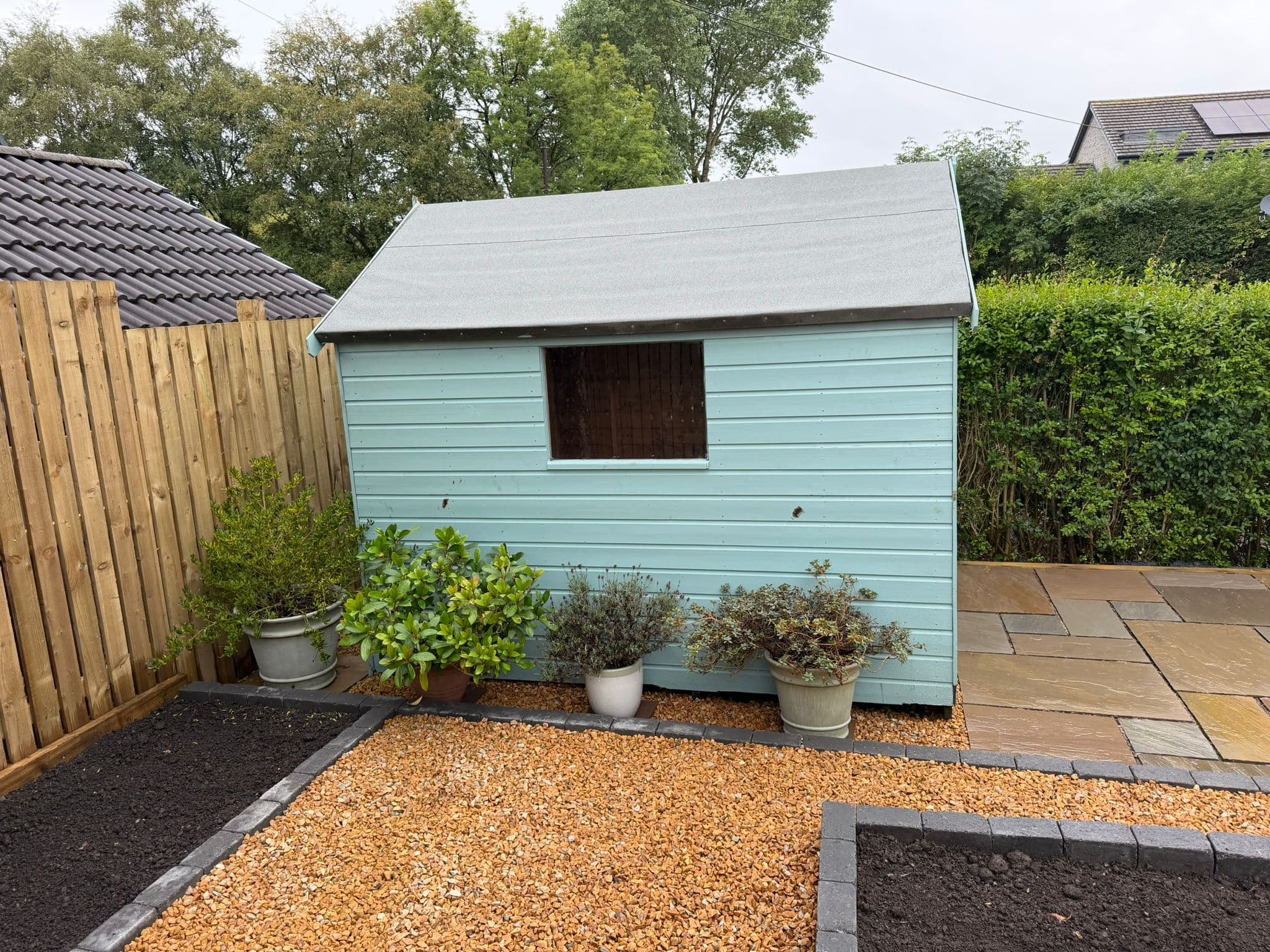
- The mature cherry and the garden shed
Where it started
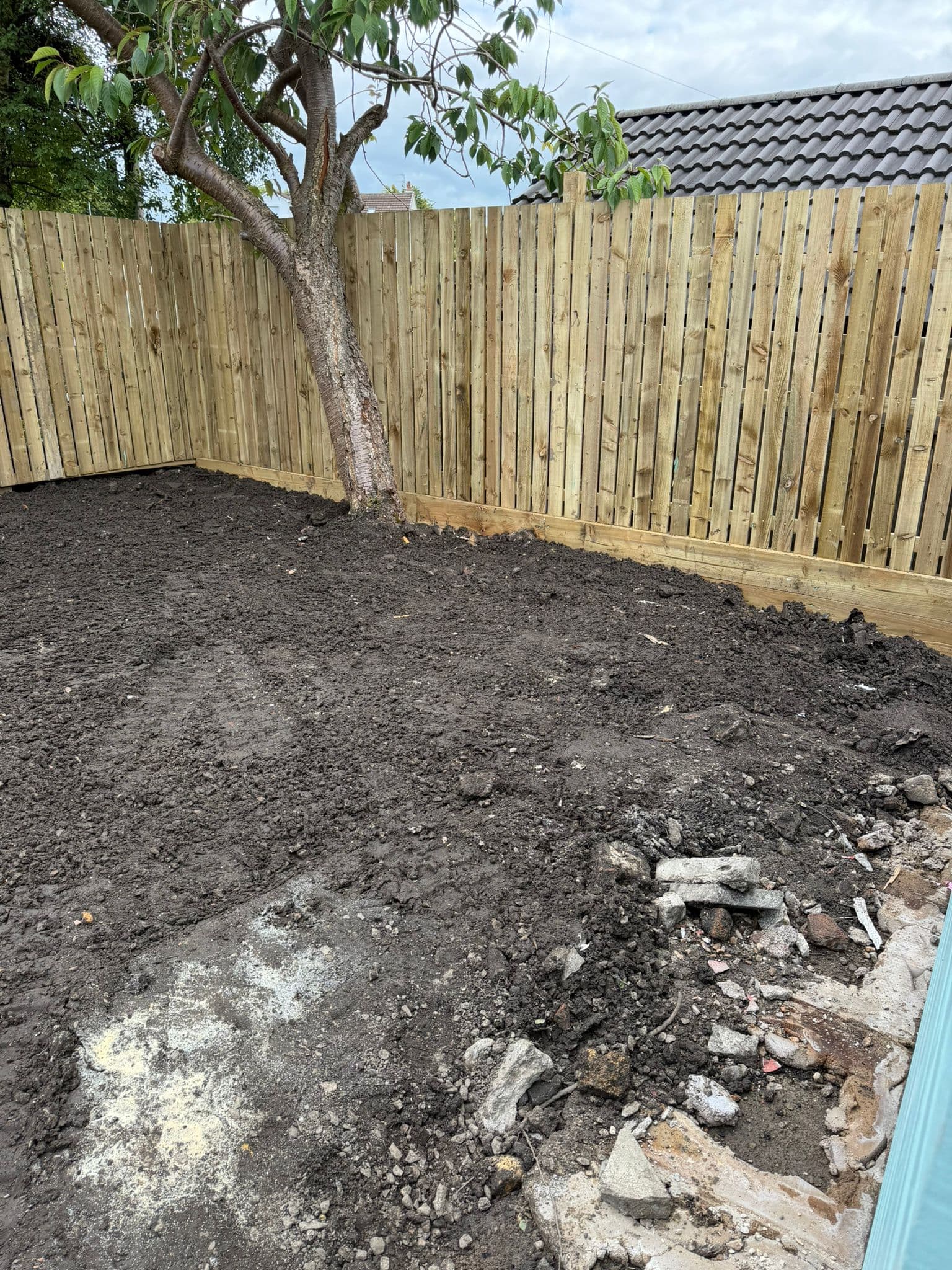
This garden had not worked for a long time. The boundaries were failing on more than one side, the ground held water through the winter, and what was left of the lawn had given up under it. Old concrete and buried rubble came out of the ground during the strip-out, which is a common find in Glasgow gardens where a previous surface has simply been broken up and left in place rather than removed.
The photographs from the clearance stage show the garden at its lowest point: bare soil from fence to fence, the mature cherry standing on its own, and spoil heaped along one side. That stage looks alarming to a homeowner and it is the right place to be. Nothing worth building sits on top of a failed lawn and buried hardcore.
Boundaries first
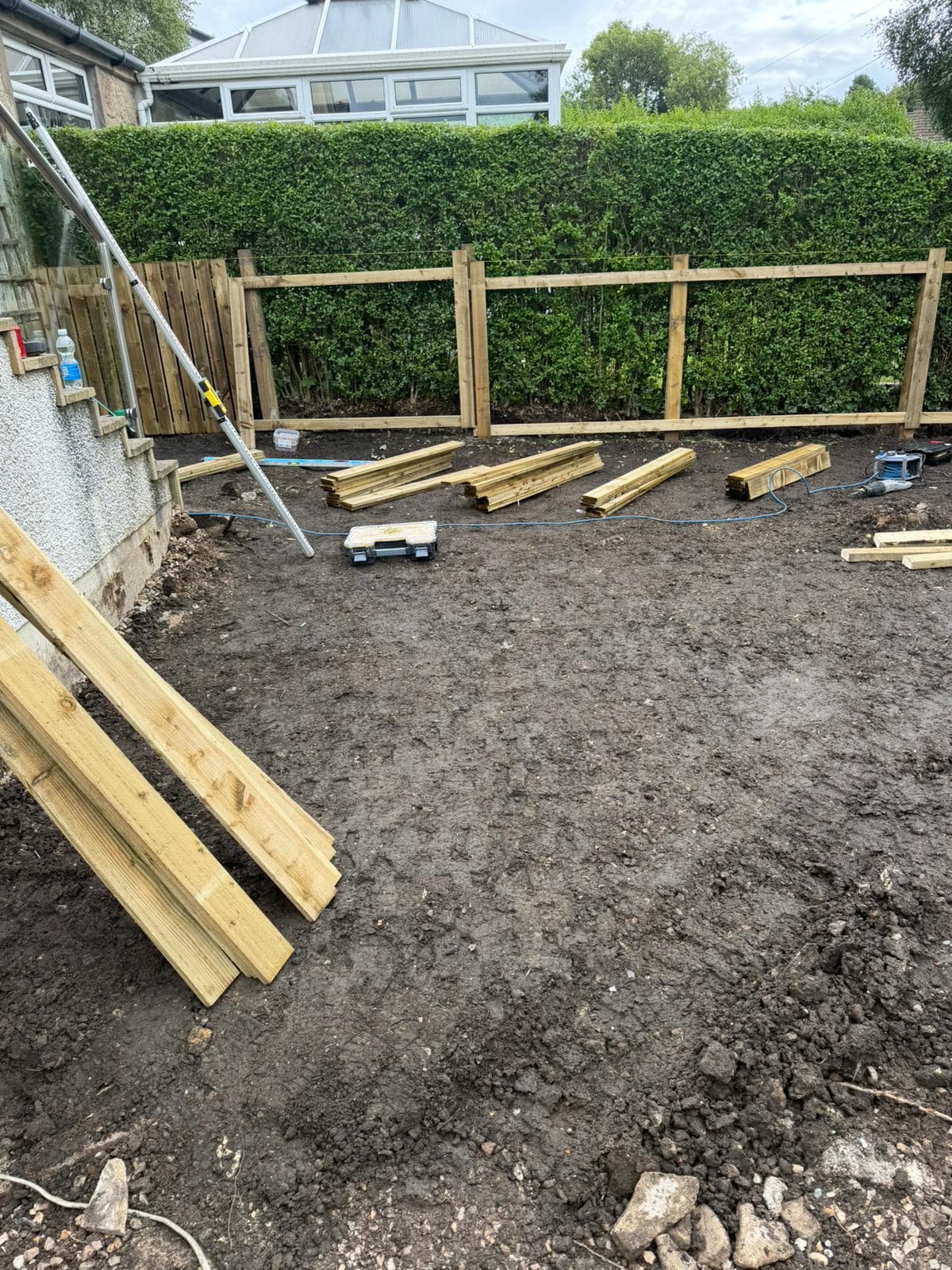
The fencing went in before anything else, and that order matters. A boundary cannot be rebuilt without machinery and materials crossing the garden, so doing it after a patio is laid means either damaging new work or working around it badly.
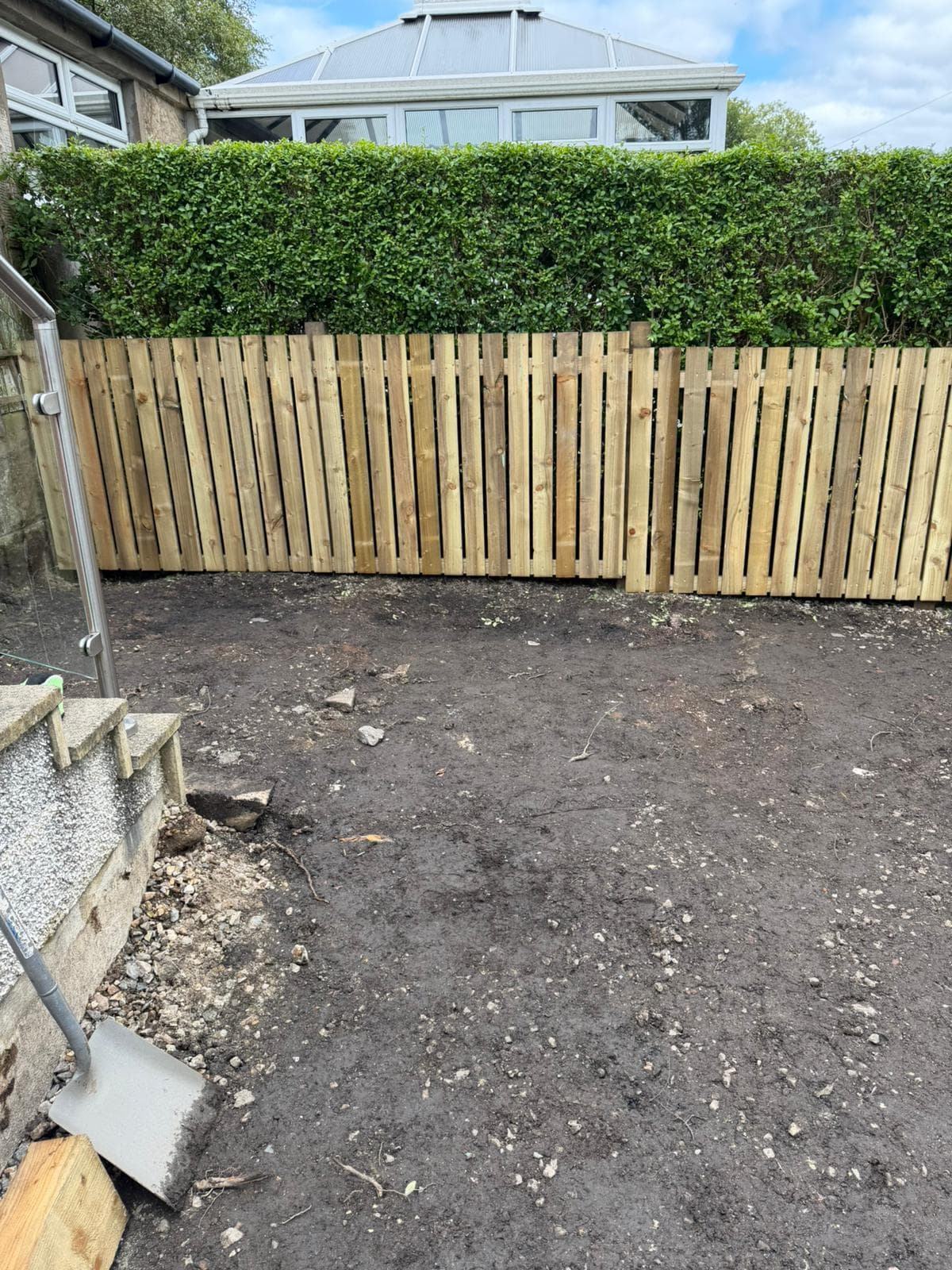
New posts and rails went up on all sides, including the run along the hedge line, with close-board cladding and gravel boards along the base. Boarding to the ground with a gravel board rather than hanging panels means the fence follows the fall of the ground and keeps the cladding clear of wet soil, which is the whole argument for building a fence this way in the west of Scotland.
With the boundaries closed the garden had a defined shape for the first time, and the levels could be set against something fixed.
Surfaces and levels
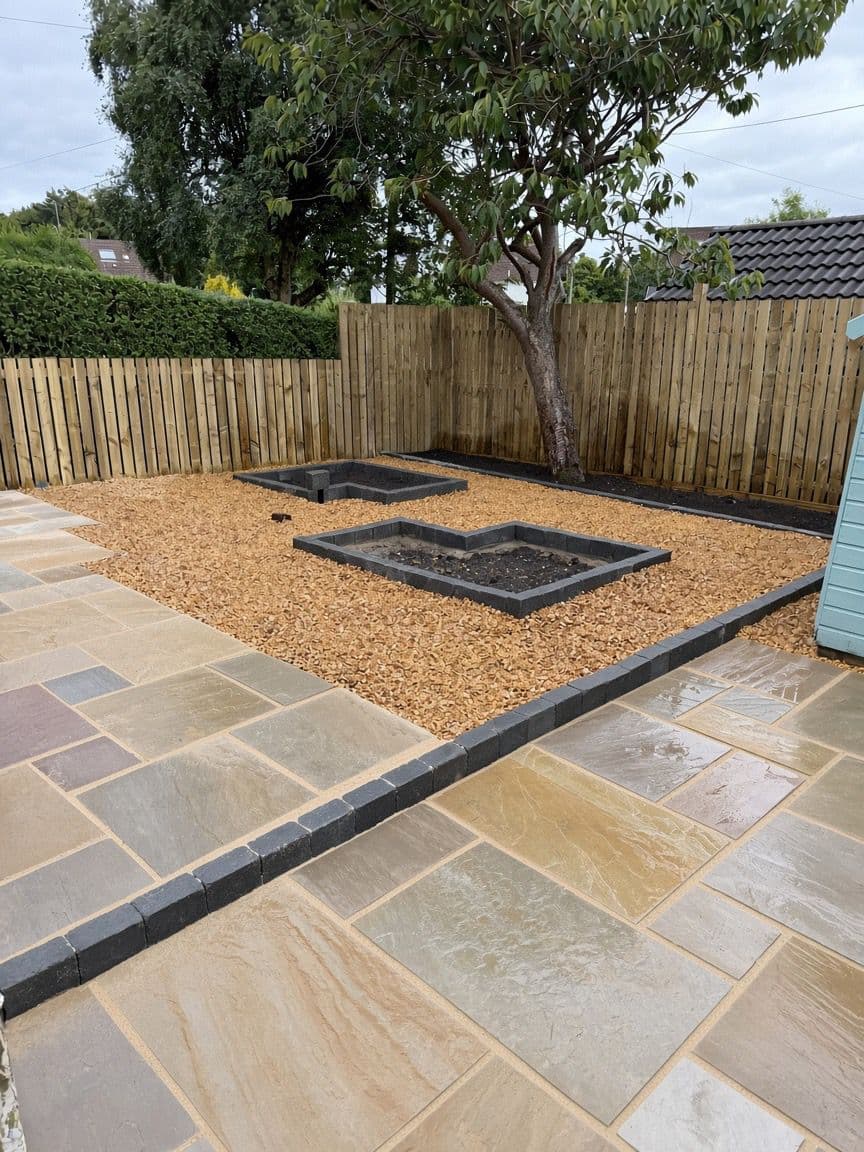
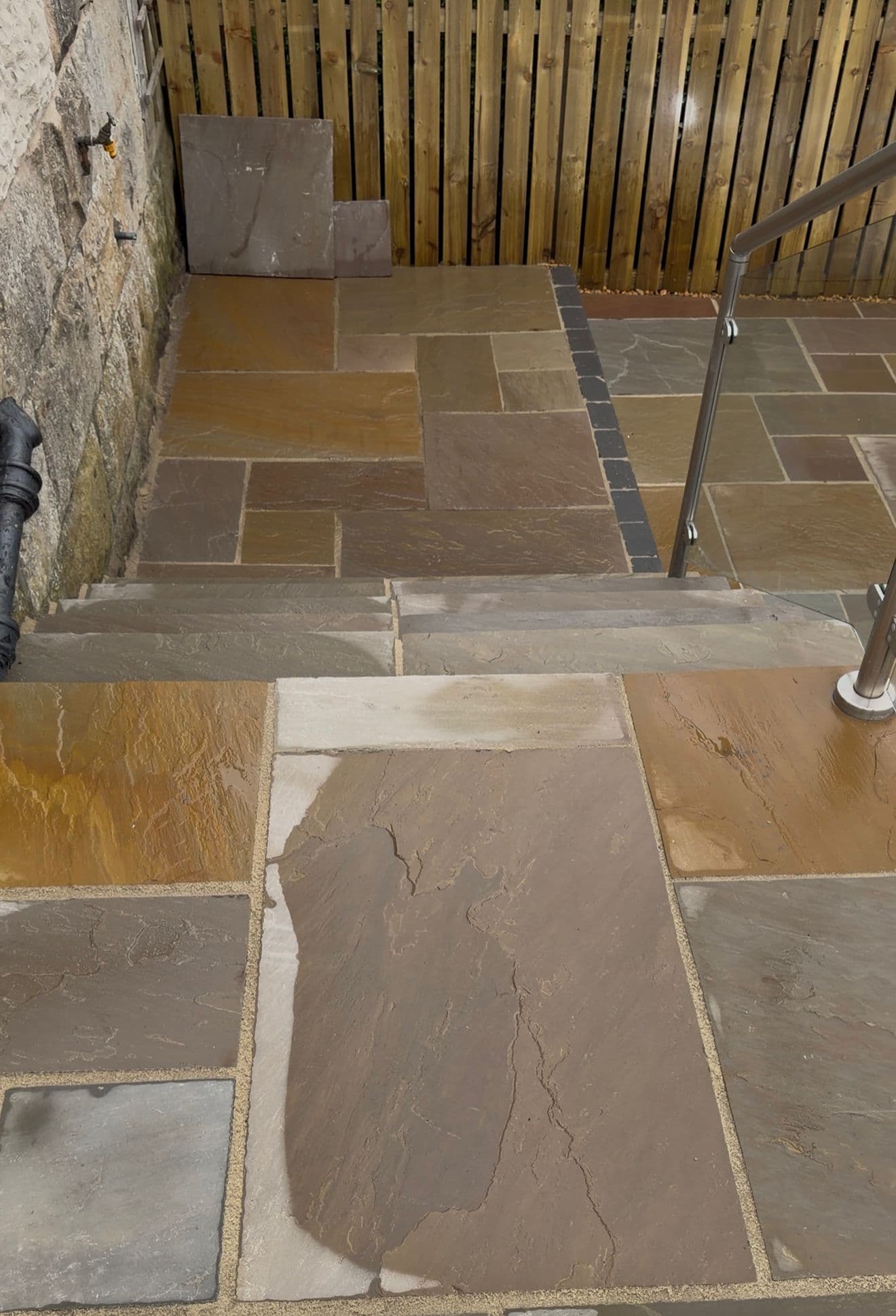
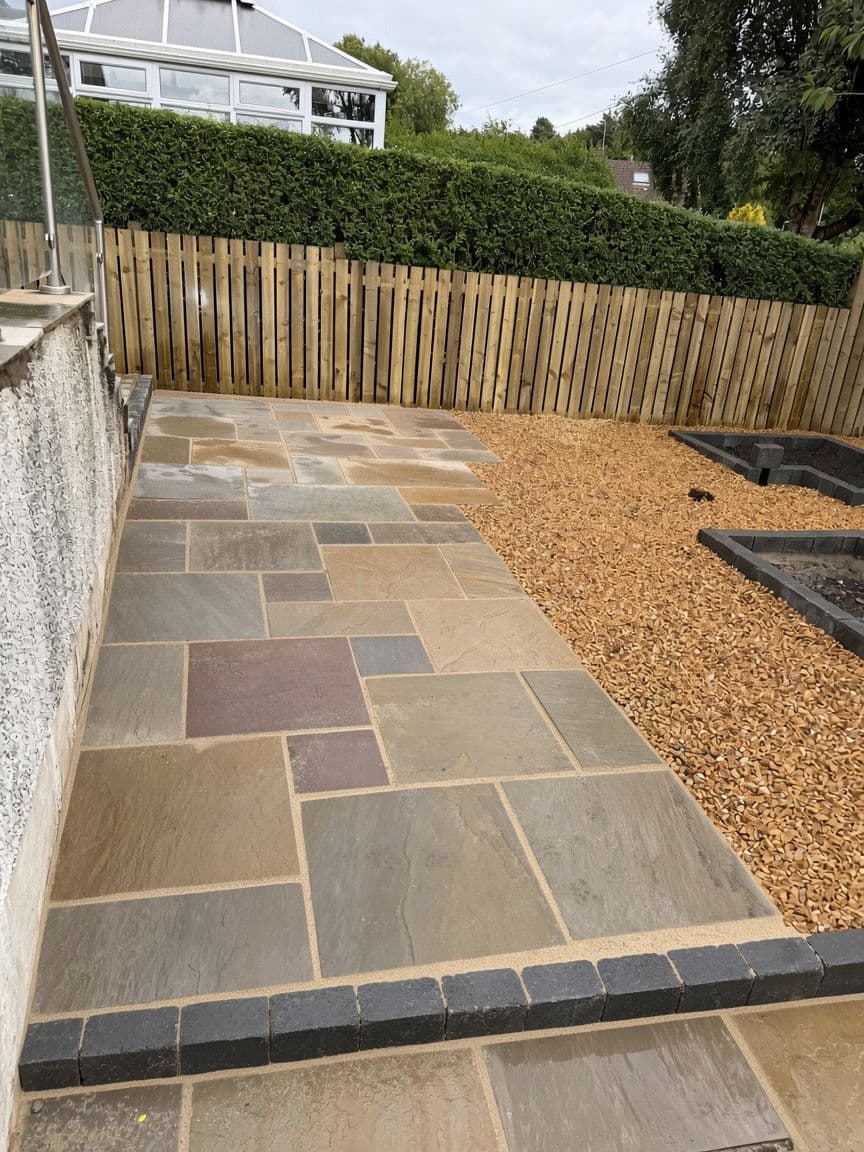
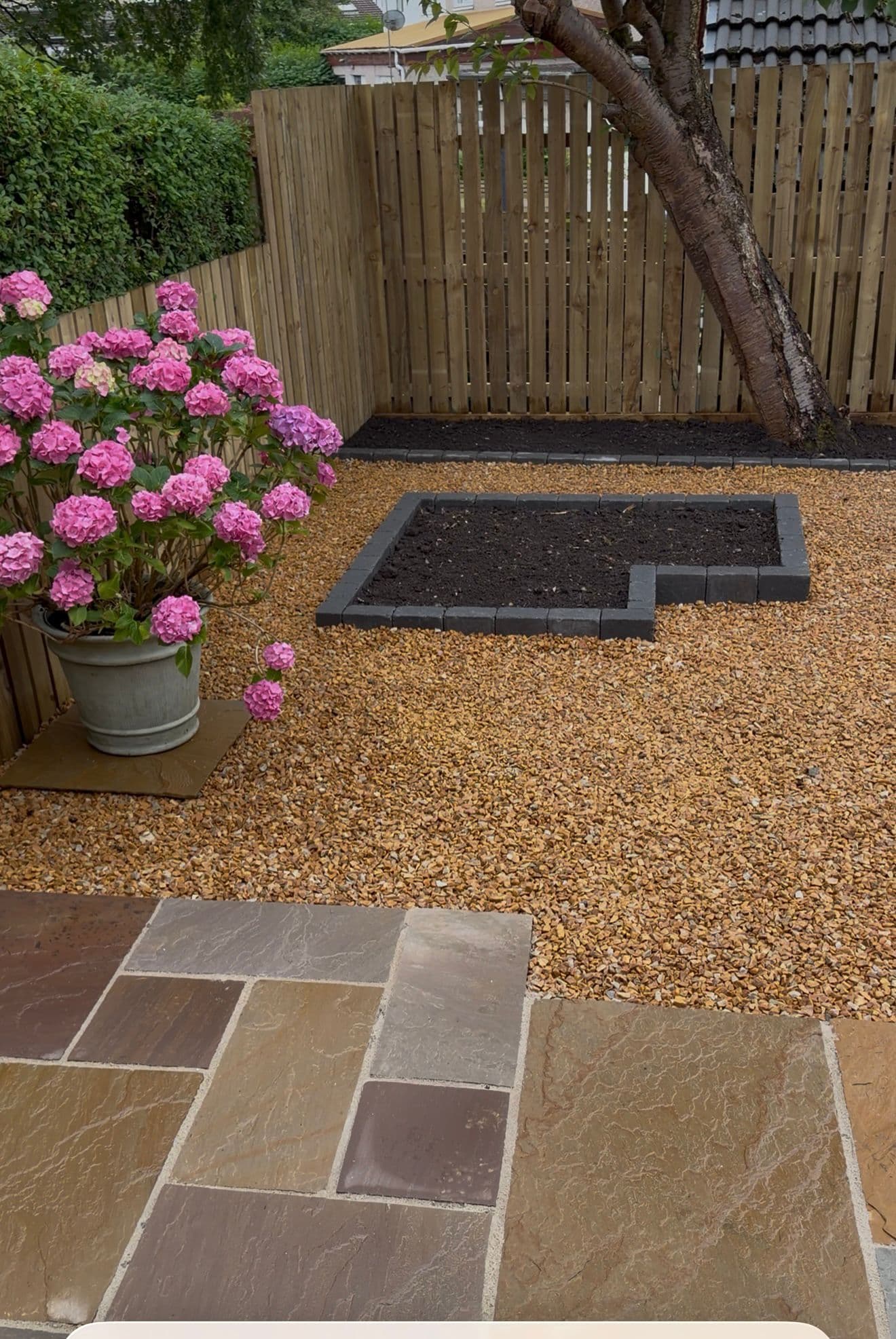
The patio is riven Indian sandstone in mixed sizes, laid in a random bond so no joint runs all the way across, and edged with a charcoal block course that separates it cleanly from the gravel beyond. The multi-tone sandstone was chosen over a single colour because it sits more comfortably against a red-brick and render Glasgow back elevation than a uniform grey would.
Falls were set to take water away from the house and off the paving rather than letting it stand, which was the original problem in this garden and is the recurring one across the west of Scotland generally. Sub-base and bedding were built up properly under the paved area rather than laid onto the existing ground.
Beyond the patio the ground is self-binding gold gravel, which gives a usable, free-draining surface over the part of the garden that had been the worst of the waterlogging. Gravel was the honest answer here: another lawn on that ground would have gone the same way as the first one.
Where the garden changes level, sandstone steps were built and finished with a glass balustrade, which keeps the sightline down the garden open rather than boxing the upper level in behind a solid rail.
Planting and the finished garden
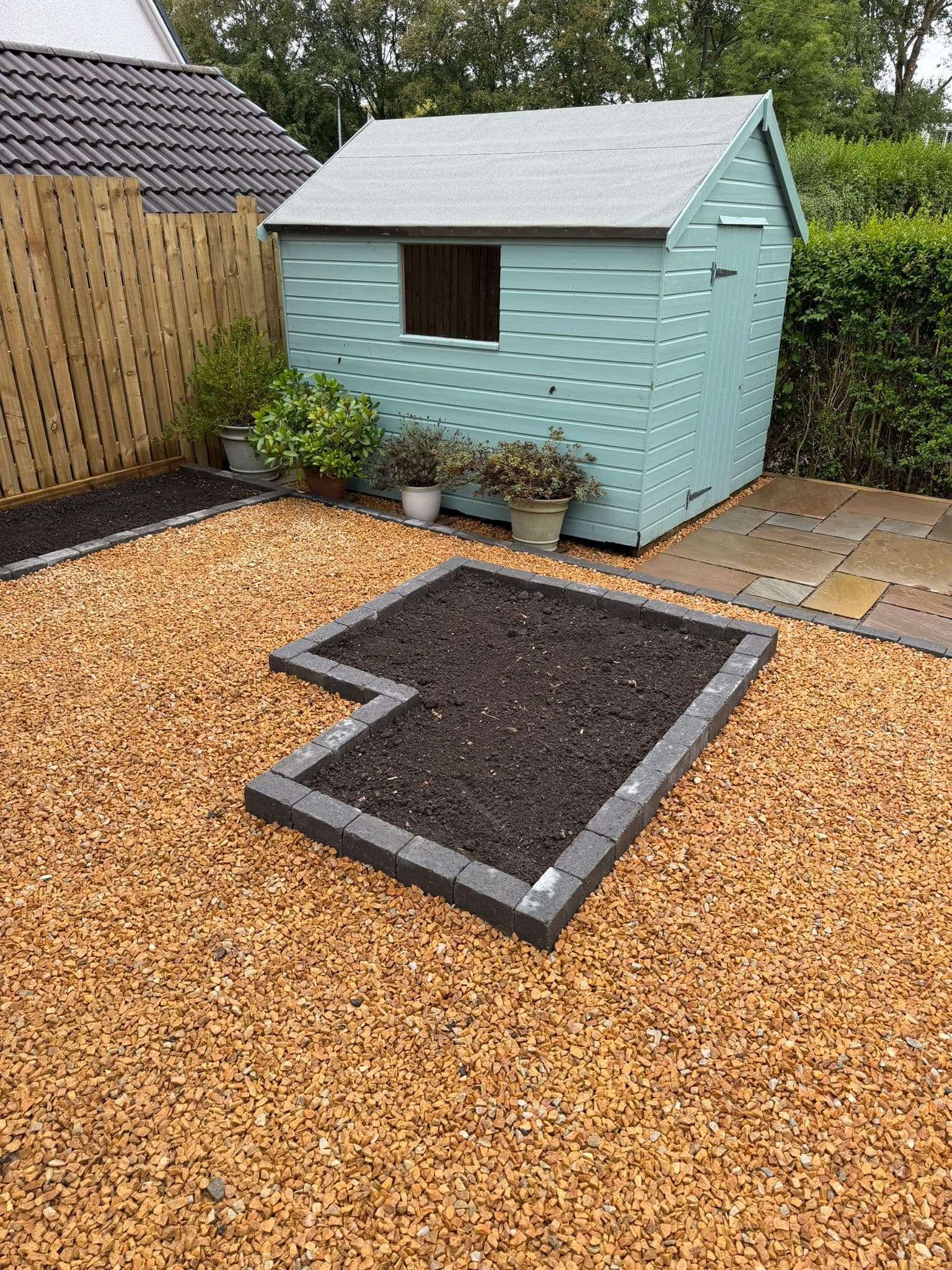
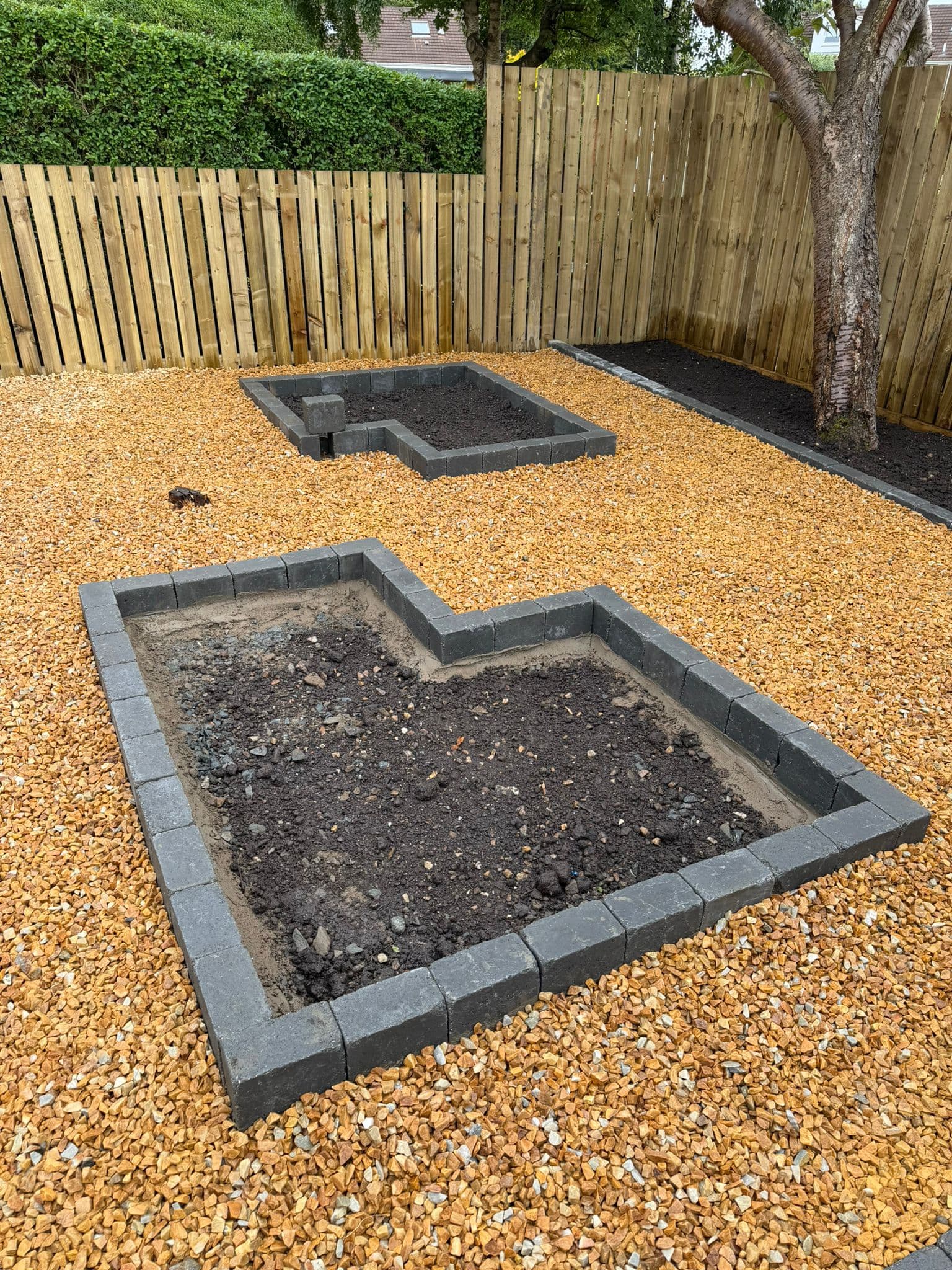
Two raised planting beds were built into the gravel in charcoal block to match the patio edging, giving proper depth of soil for planting in a garden where the natural ground had been the problem. Raised beds solve drainage for the plants and give the flat gravel area some height and structure at the same time.
The mature cherry was retained throughout and now sits in a planted strip along the boundary rather than in the middle of a failing lawn. The shed was kept and repainted, which is almost always better value than replacing a sound shed.
The result is a garden that drains, that can be walked on in February, and that needs a fraction of the upkeep the lawn did. The patio takes the furniture, the gravel takes the traffic, and the planting is contained in beds rather than spread through borders that need edging twice a season.
Materials used
- Pressure-treated close-board fencing with gravel boards
- Riven Indian sandstone paving in mixed sizes
- Charcoal block edging and raised bed courses
- Self-binding gold gravel
- Sandstone steps with a glass balustrade
- Imported topsoil for the raised beds
Photographs from the job
Questions about work like this
Why do the fencing before the patio?
Because rebuilding a boundary means carrying posts, rails and cladding across the garden and digging along every edge of it. Doing that after a patio is down risks damaging new paving, and working around finished surfaces slows the fencing considerably. Boundaries first is almost always the right order on a full rebuild.
Is gravel a reasonable alternative to a lawn?
On ground that holds water it often is. A lawn on waterlogged clay will thin, fill with moss and stay unusable through the winter no matter how it is treated. Self-binding gravel over a proper base drains, can be walked on all year, and does not need cutting. It is not the answer for every garden, but it is the honest answer for some.
How long does a full garden rebuild take?
Most domestic rebuilds of this size run from several days to a couple of weeks depending on access, how much has to come out of the ground and how much hard landscaping is involved. Buried concrete and rubble, which turned up on this job, is the usual reason a timescale moves.
Can existing features be kept in a rebuild?
Yes, and it is usually worth it. On this garden the mature cherry and the shed were both retained, the shed simply repainted. Keeping an established tree in particular is hard to buy back later, so it is designed around rather than cleared.
Ask about a job like this
Tell Scotia Maintenance where you are and what the garden needs. Work of this kind is carried out across Glasgow and the surrounding towns, seven days a week.
- Call
- 07766 636189
- Message on WhatsApp
- Opening hours
- Monday to Sunday, 8:00am – 4:00pm