
Case study · Auldhouse, Glasgow
Rear boundary fence replacement in Auldhouse, Glasgow
A failed close-board boundary onto a rear service lane taken out and rebuilt from the ground up in pressure-treated timber, with new posts, rails and gravel boards.
Auldhouse, Glasgow
Rear boundary fence replacement
A failed close-board boundary onto a rear service lane taken out and rebuilt from the ground up in pressure-treated timber, with new posts, rails and gravel boards.
Read the case studyAt a glance
The job in short
- Location
- Auldhouse, Glasgow southside
- Work
- Full rear boundary fence replacement
- Access
- Rear service lane, no access through the house
- Build
- Close-board on posts, rails and gravel boards
- Timber
- Pressure-treated softwood throughout
- Old fence
- Stripped out and taken away
What the boundary looked like before
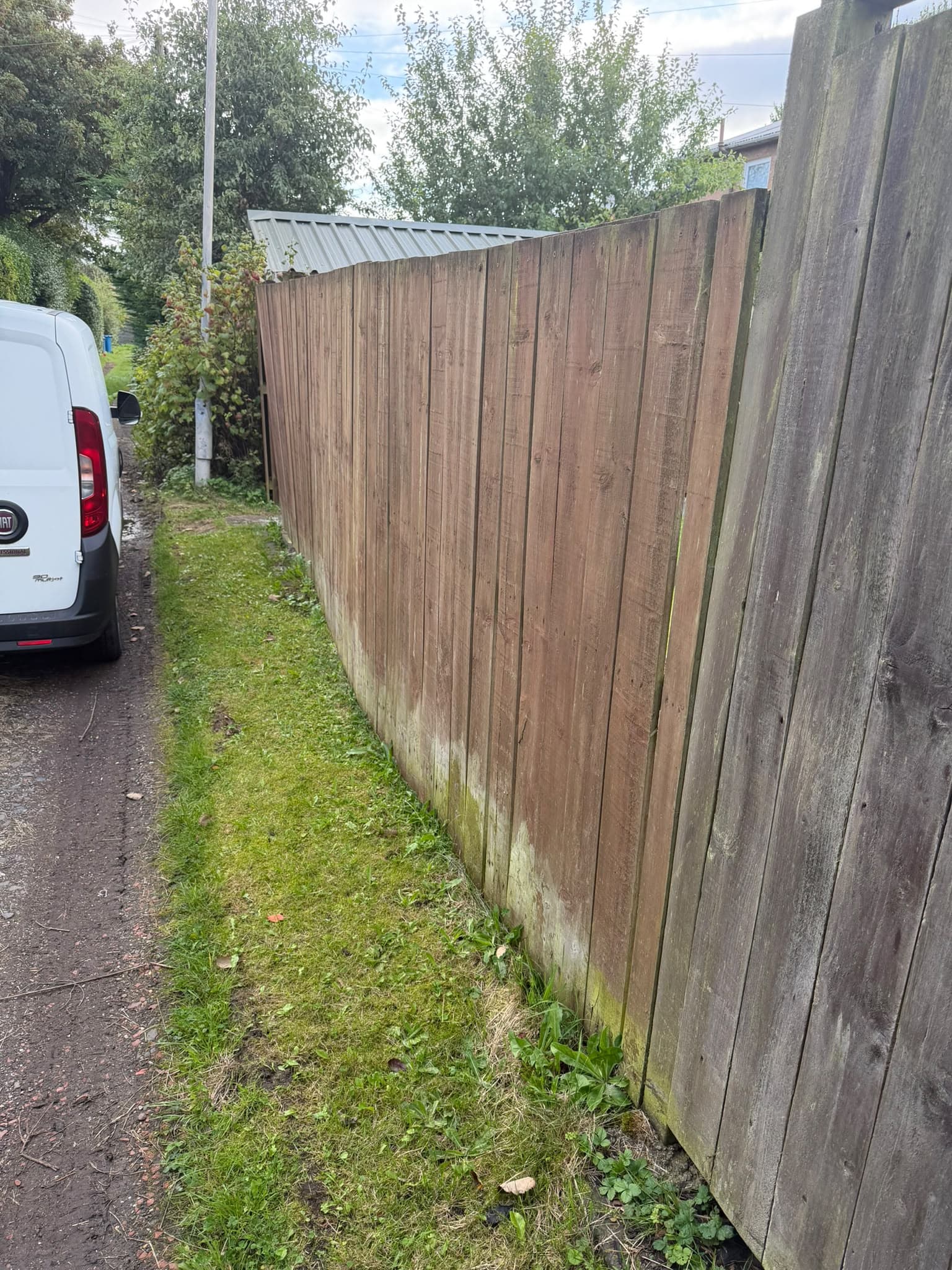
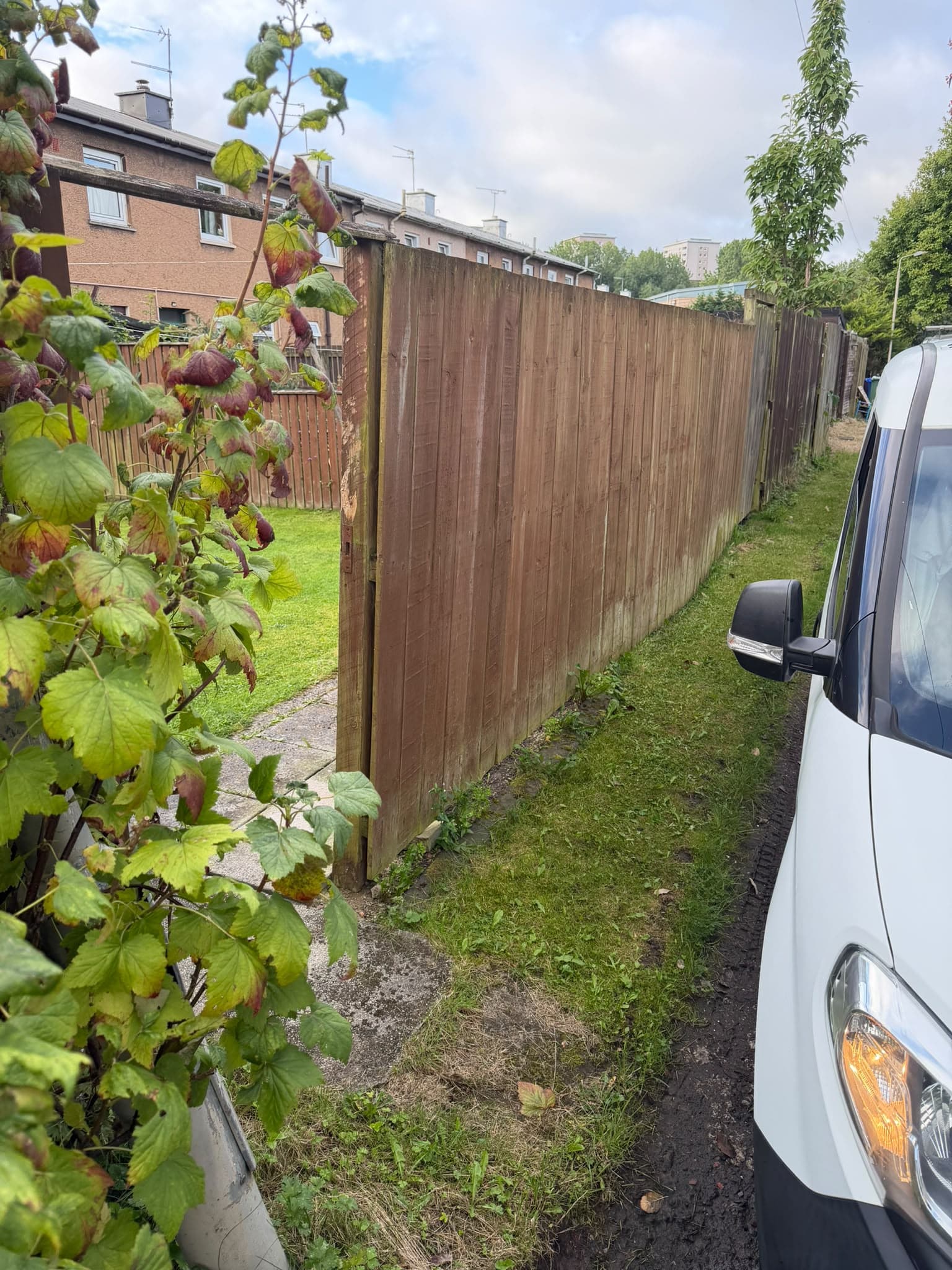
This is a terraced row on the Glasgow southside where the rear gardens back onto a shared service lane. The boundary between the two is the only thing separating a private garden from a public route, and on this property it had stopped doing the job. The photographs taken before any work started show the run leaning out into the lane, the boards weathered through to a flat grey, and a band of green algae growing up the bottom third of every board where they had been sitting in wet grass.
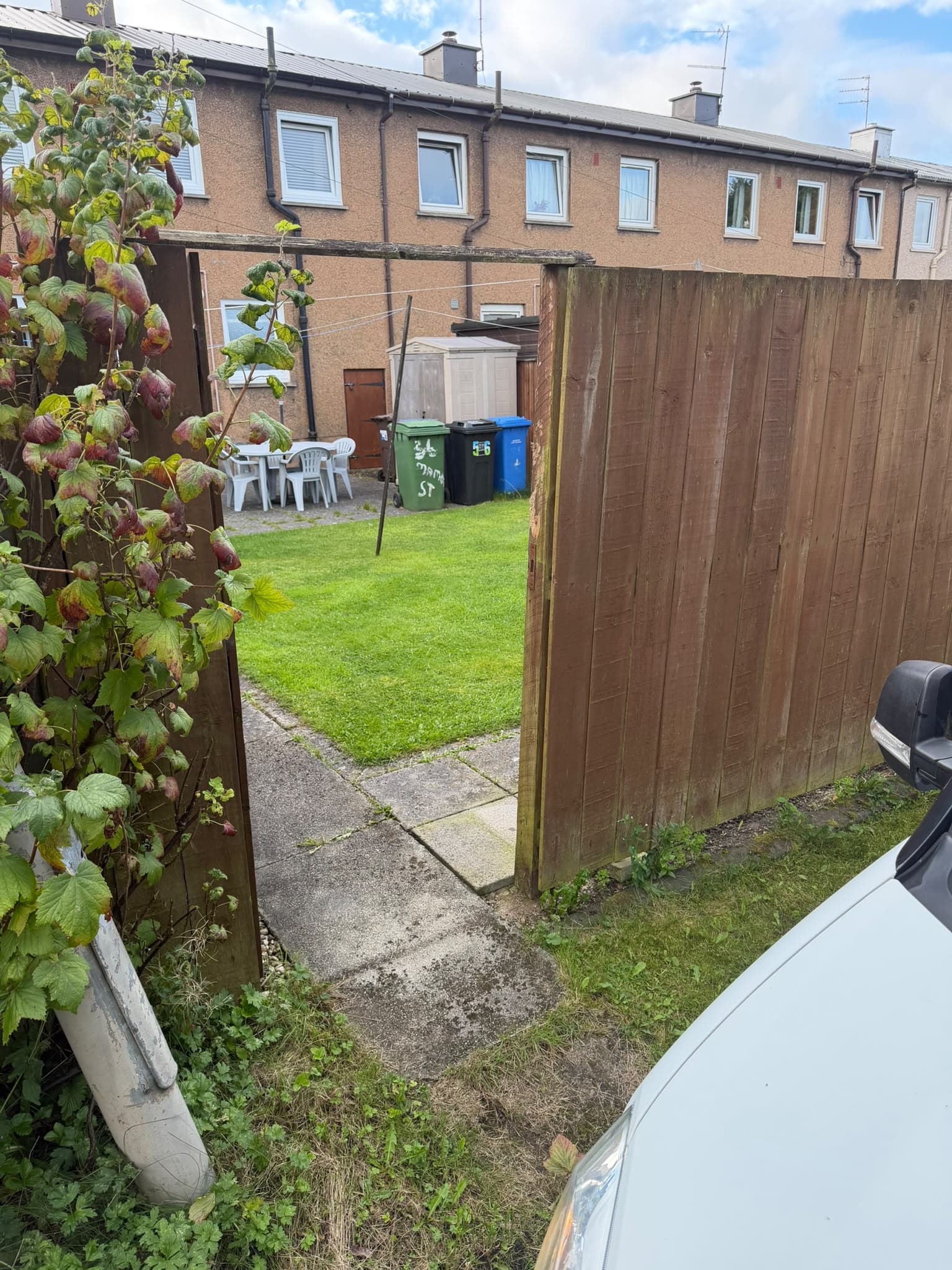
One section had gone altogether. Where a bay had failed it had simply been removed, leaving an open gap straight from the lane into the back garden, past the drying green and the bins to the back door. What was left either side was still standing but no longer doing much more than that.
Nothing about that is unusual for a fence of this age in the west of Scotland. What is worth saying is that it had reached the point where repair was no longer the cheaper option.
Why the old fence had failed
Fences in this part of Scotland almost never fail at the top. They fail in the bottom hundred millimetres, where the timber meets the ground, and they fail for the same two reasons every time.
The first is that the boards were running straight into the soil. With no gravel board, the end grain at the foot of each board sits in wet ground for most of the year, wicks water upward and rots from the bottom up. That is exactly the pattern visible in the before photographs: sound timber at head height, soft green-stained timber at ankle height.
The second is the posts. Once a post rots at ground level the fence is finished regardless of how good the boards above it are, because there is nothing left holding the rails. Replacing boards on posts that are already going is money spent on a fence that will lean again inside two seasons. On this job the decision was to take the whole run out and start from the posts, which is the only version of this work that lasts.
How the new fence was built
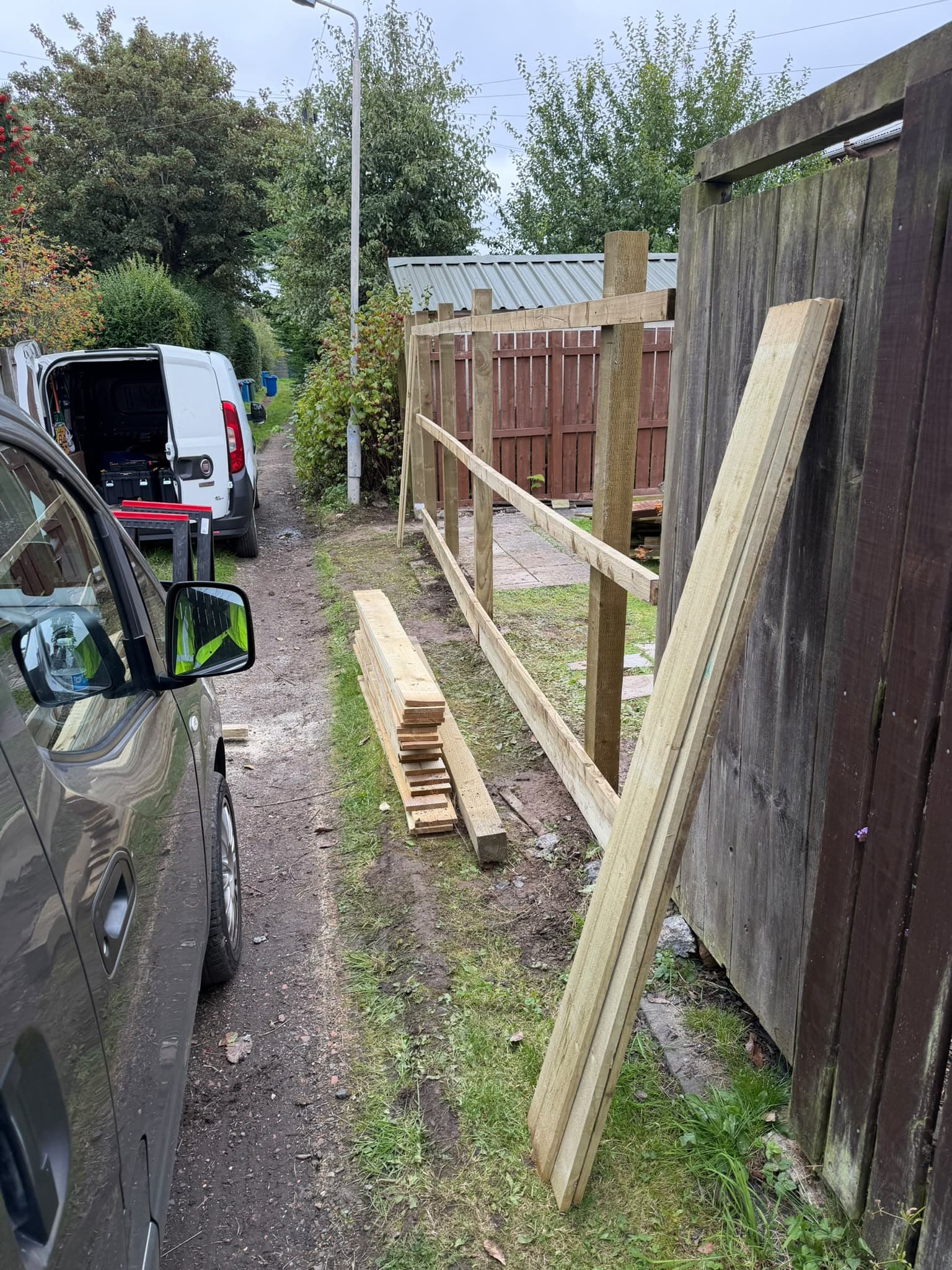
The old fence was pulled out first and removed from site, along with the rotted post stumps. Working from the lane meant none of that had to be carried through the house or the garden, which is the one genuine advantage a rear-lane boundary has and it is worth planning the job around.
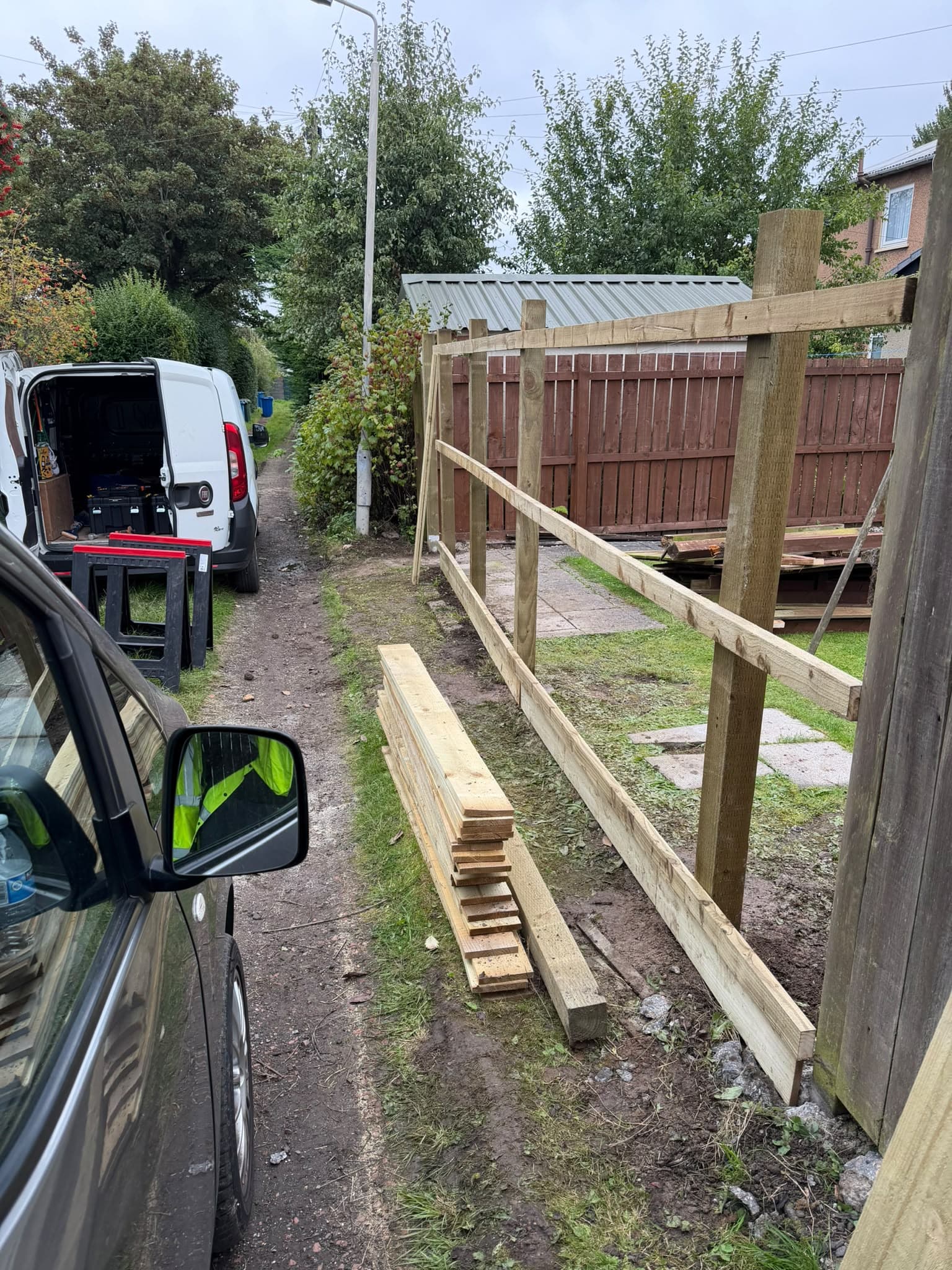
New pressure-treated posts went in next, set at consistent centres down the run and fixed so the line is straight along a lane that is not. The mid-build photographs show the frame at this stage: posts up, horizontal rails fixed between them, and the boards still stacked on the grass waiting to go on. It is the least impressive-looking part of the job and it is the part that decides whether the fence is still standing in fifteen years.
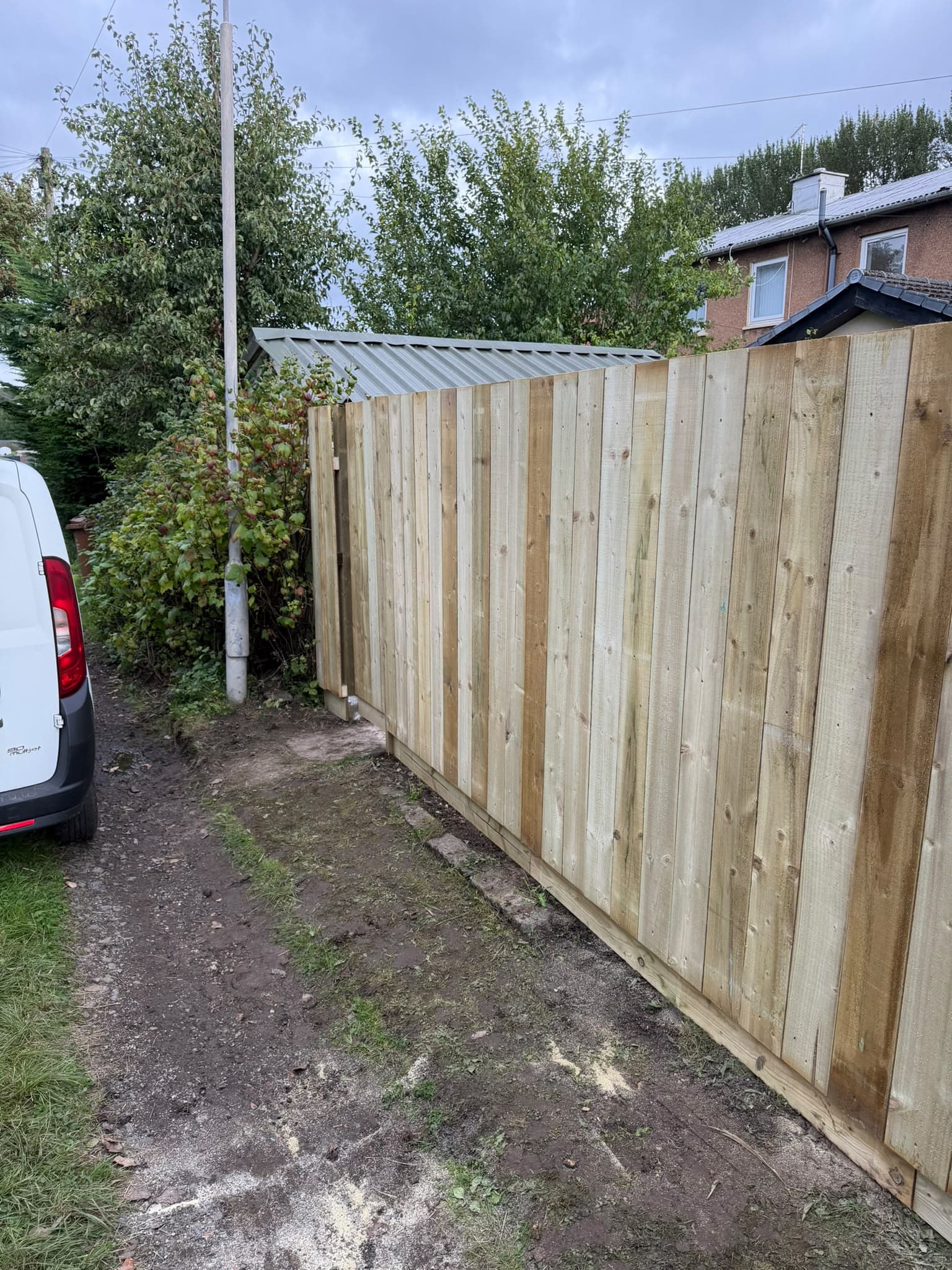
Gravel boards were fitted along the base before any cladding went up. That single component is the difference between a fence that rots from the ground and one that does not, because it keeps the vertical boards clear of the soil and takes the ground contact itself. If it ever needs replacing, a gravel board is a cheap item to change and the fence above it is untouched.
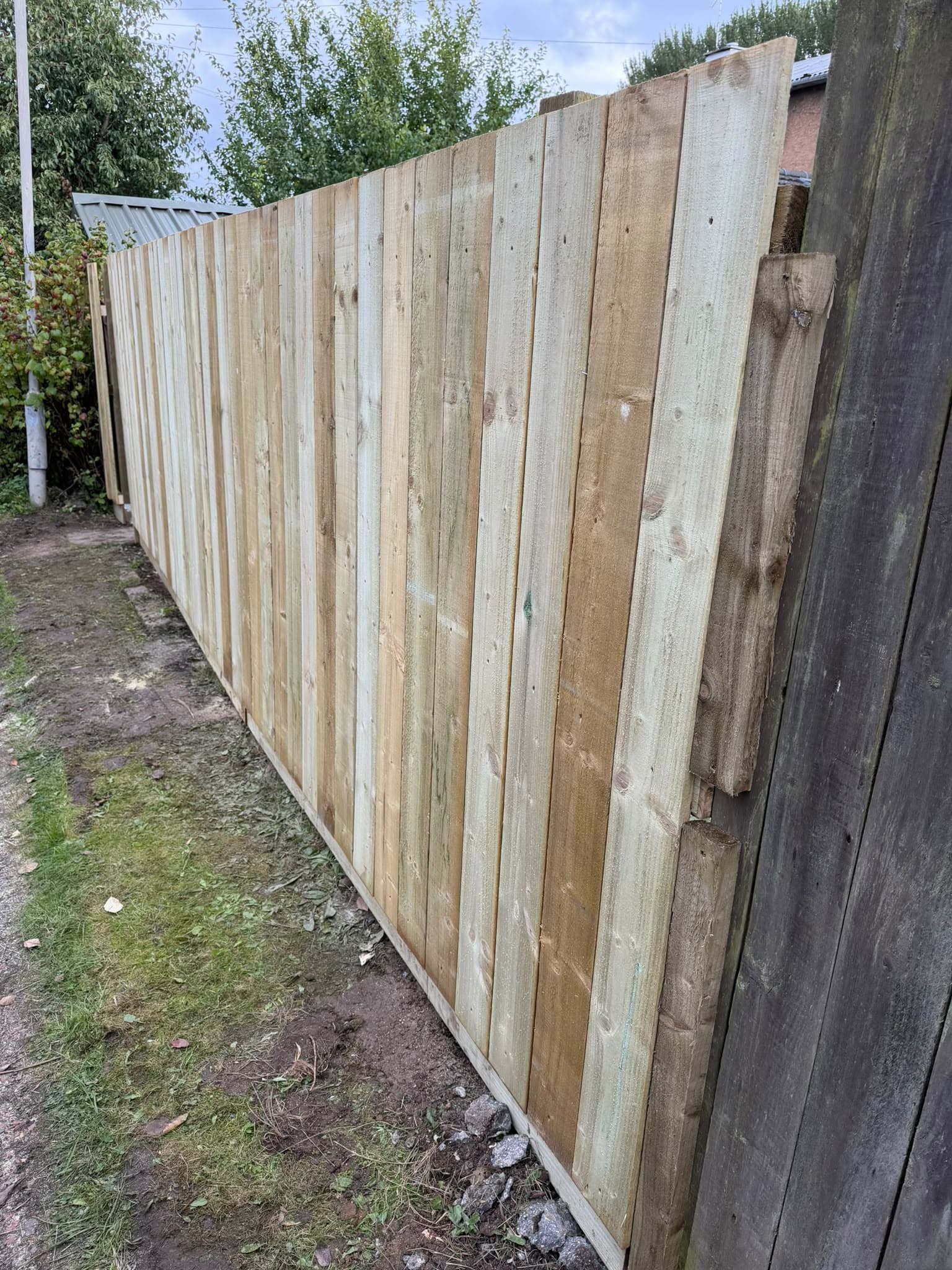
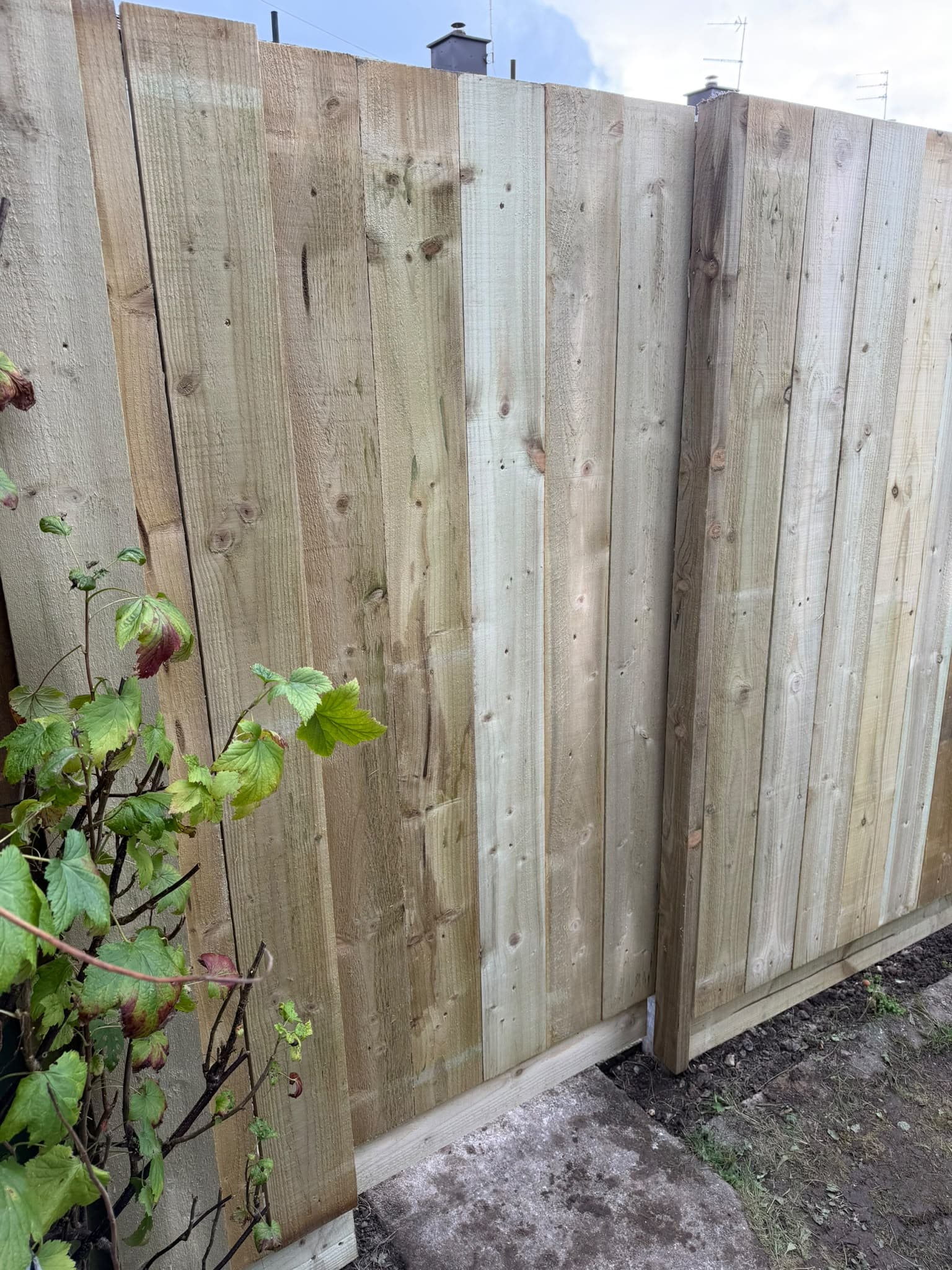
The close-board cladding went on last, each board fixed individually rather than hung as a prefabricated panel. Boarding a fence this way lets the run follow the ground as it falls, keeps the top line consistent, and means a single damaged board can be swapped later without taking out a whole bay. Along the section where the new fence meets the neighbouring old one, the boards were scribed in so there is no gap left at the junction.
The finished boundary
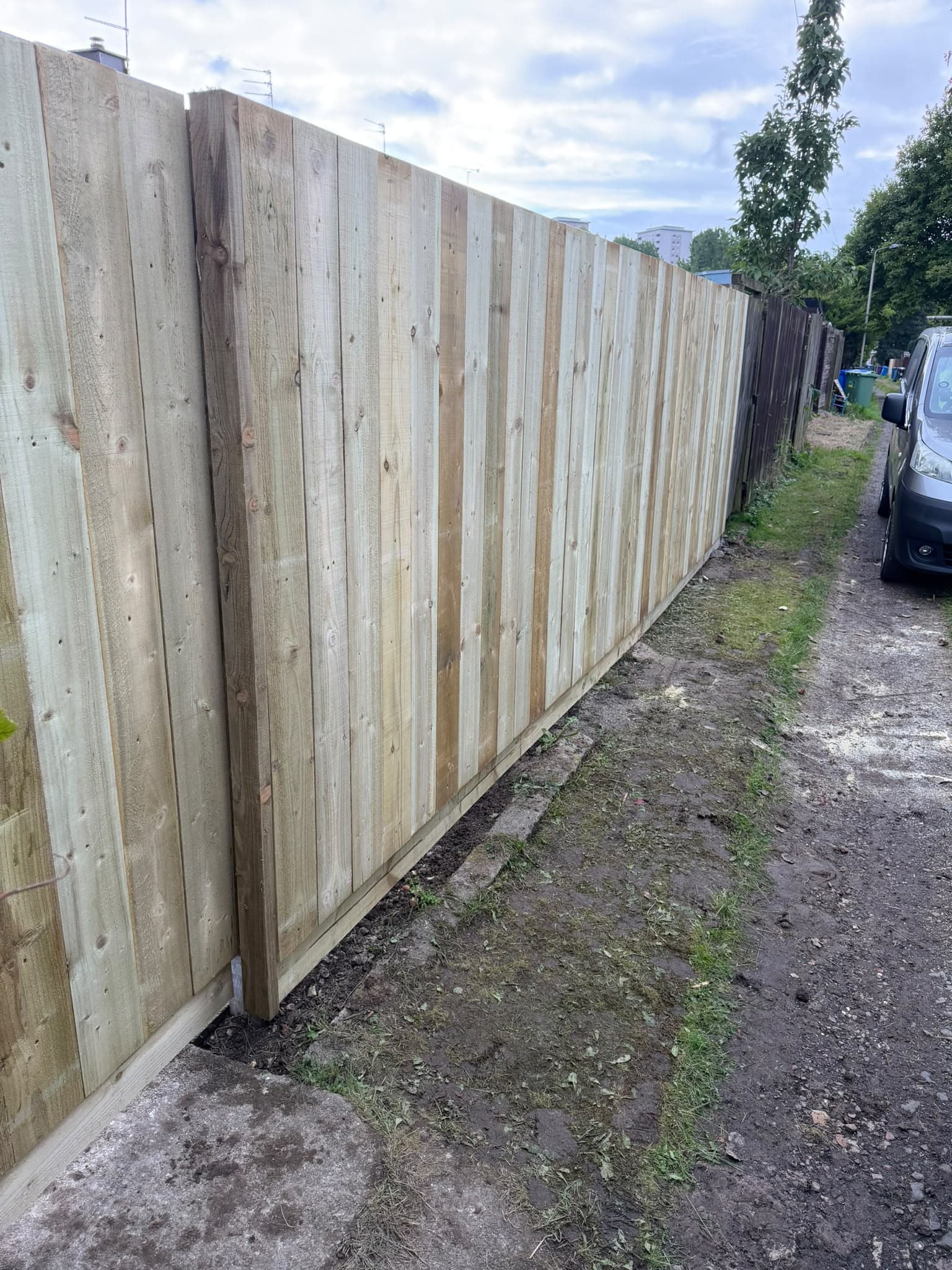
The finished run closes the garden off from the lane along its full length, including the section that had been standing open. From inside the garden it reads as one continuous line rather than a set of panels, and the gap at the far end that had been an open route in is now boarded shut.
The timber is left untreated pressure-treated softwood, which weathers from the green of new treatment to a soft silver grey over the first couple of years. It can be stained or painted at any point if the owner wants a colour, and it is easier to do that after the timber has dried out and settled than on the day it goes up.
All the old timber, the post stumps and the offcuts went away with us. The strip of ground along the lane was left clear.
Materials used
- Pressure-treated softwood posts
- Pressure-treated horizontal rails
- Pressure-treated gravel boards along the full run
- Close-board feather-edge cladding, fixed board by board
- Galvanised fixings throughout
Photographs from the job
Questions about work like this
Is it cheaper to repair a leaning fence than replace it?
Sometimes, and it is always worth checking. The test is the posts. If the posts are sound, replacing boards or a rail is worthwhile. If the posts have gone at ground level, as they had in Auldhouse, new boards are being fixed to something that is already failing and the fence will move again within a season or two. That is assessed on site before anything is quoted.
What is a gravel board and do I need one?
A gravel board is the horizontal board that runs along the very bottom of a fence, between the ground and the cladding. It takes the ground contact so the vertical boards never sit in wet soil, which is where fences in the west of Scotland almost always rot first. On any fence meant to last it is worth having, and it is a cheap component to replace on its own later.
Do I need to treat a new fence?
Not immediately. Pressure-treated timber is protected through the section rather than on the surface, so it does not need a coat to survive. Staining or painting is a choice about colour, and it is better done once the timber has weathered and dried out for a season rather than on the day it goes up.
Can you replace a fence that backs onto a shared lane?
Yes, and rear-lane access usually makes the job easier because materials and old timber do not have to be carried through the house. Where a boundary is shared, it is worth speaking to the neighbour before the work is booked so everyone knows what is happening and when.
Ask about a job like this
Tell Scotia Maintenance where you are and what the garden needs. Work of this kind is carried out across Glasgow and the surrounding towns, seven days a week.
- Call
- 07766 636189
- Message on WhatsApp
- Opening hours
- Monday to Sunday, 8:00am – 4:00pm