
New builds
Why New-Build Gardens Struggle in Their First Few Years
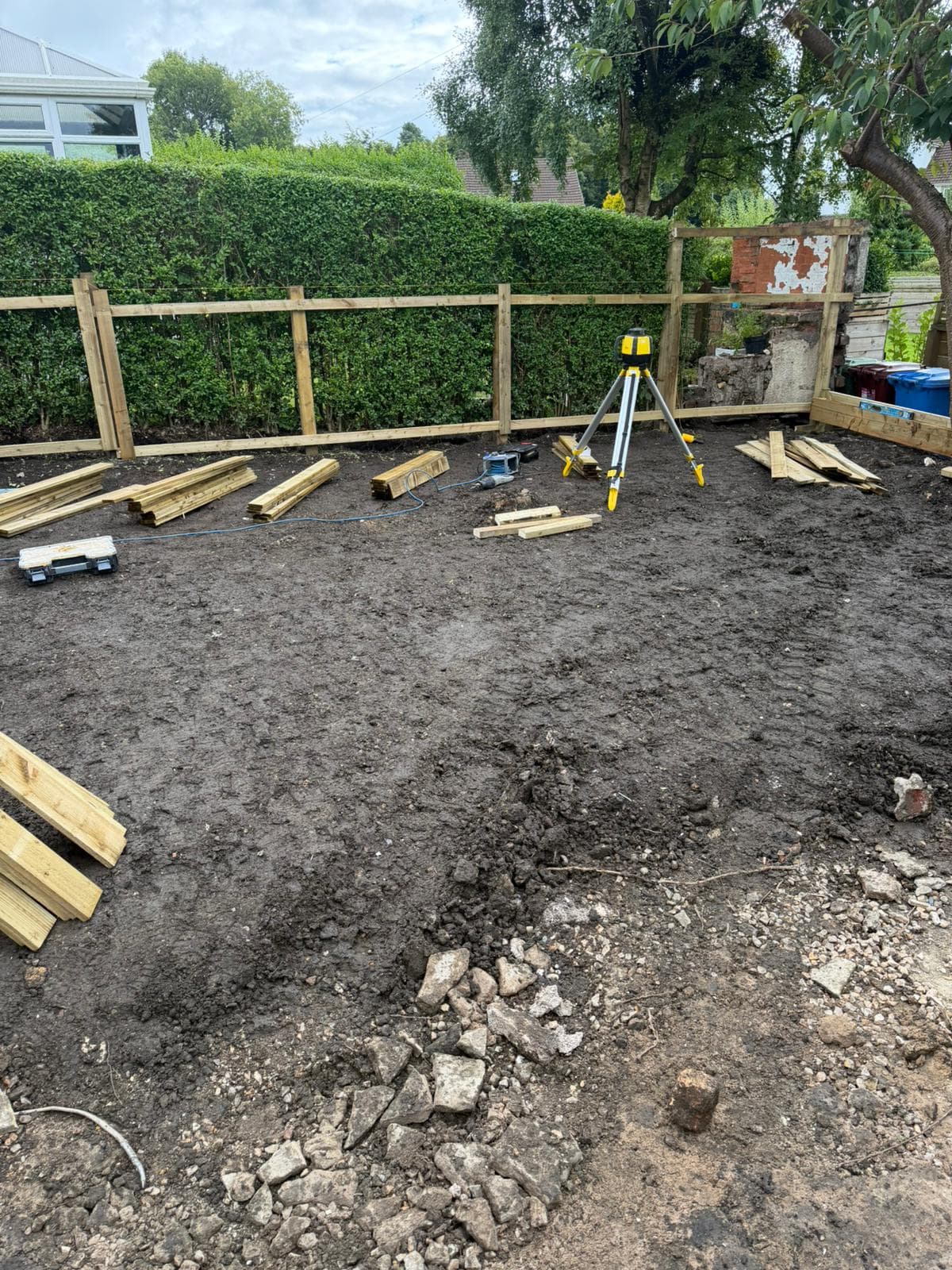
There is a particular kind of disappointment that comes with a new-build garden. The turf went down days before you moved in, it looked immaculate, and within eighteen months it is thin, mossy, boggy in one corner and bone hard in another. Nothing you have done has caused it, and nothing you buy in a garden centre is going to fix it, because the problem is a foot underneath the grass.
What is actually under the turf
A plot on an estate like Dargavel in Bishopton has spent two years as a construction site. Tracked machinery, material stacks and site traffic have run over that ground repeatedly, and the result is soil compressed to something closer to a road base than a growing medium. On top of that goes a thin skim of topsoil, sometimes as little as 50mm, and then turf.
- Compaction: air gaps in the soil are crushed out, so water cannot drain through and roots cannot push down.
- Thin topsoil: roots reach the compacted layer within weeks and stop, leaving the lawn living off a few centimetres of soil.
- Buried debris: brick, mortar, plastic and offcuts left below the surface create dead patches that never respond to feeding.
- Levels run to the house: gardens are often finished falling towards the building rather than away from it.
Those four together explain almost every failing new-build lawn in the west of Scotland. A grass that cannot root deeper than 50mm dries out in the first warm week of summer and drowns in the first wet week of autumn, sometimes within the same month.
Why surface treatments do not shift it
Feed, moss killer and overseeding all act on the top few centimetres. If the top few centimetres are the problem, they help for a season. If the problem is that there is nowhere for roots or water to go, they change nothing, and people end up repeating the same treatment every spring wondering why it never holds.
Getting a new-build garden working starts underneath. That usually means breaking up the compacted layer, bringing in a real depth of topsoil, and correcting the falls so water leaves the plot rather than pooling at the back door. Where the ground is genuinely waterlogged rather than simply tight, drainage goes in before anything green does. It is less satisfying than laying turf, and it is the only part of the job that decides whether the lawn is still good in five years.
Turf, seed or artificial from there
Once the ground is right, all three routes are open. Turf gives an instant lawn and is usually the choice where a garden needs to be usable quickly. Seed costs less and roots better over time but wants a season of patience. Artificial grass is worth considering on a plot that is heavily shaded or in constant use by children and dogs, provided it is built on a proper compacted sub-base rather than rolled over the existing soil.
The structure a new plot was never given
New-build gardens are handed over as a rectangle of turf inside a fence. No beds, no paths, no screening, no shelter. Once the ground has been sorted, the work that makes the biggest difference is adding that structure: a defined bed with a proper edge, a path along the line already being worn into the grass, a patio sized for the furniture you actually own, and planting chosen for how exposed the plot is rather than what looked good in a garden centre in April.
The same pattern turns up on newer estates around Erskine and out towards Renfrew. If your garden is going through it, a visit and a free quote will tell you what is under there, which is the part no photograph can answer.
Related services
Areas this applies to
Get a free quote
Tell us where you are and what the garden needs. Quotes are given after seeing the space, so the price reflects the actual job rather than a guess.
- Call
- 07766 636189
- Message on WhatsApp
- Opening hours
- Monday to Sunday, 8:00am – 4:00pm