
Drainage
Waterlogged Gardens: Why It Happens Here and What Actually Fixes It
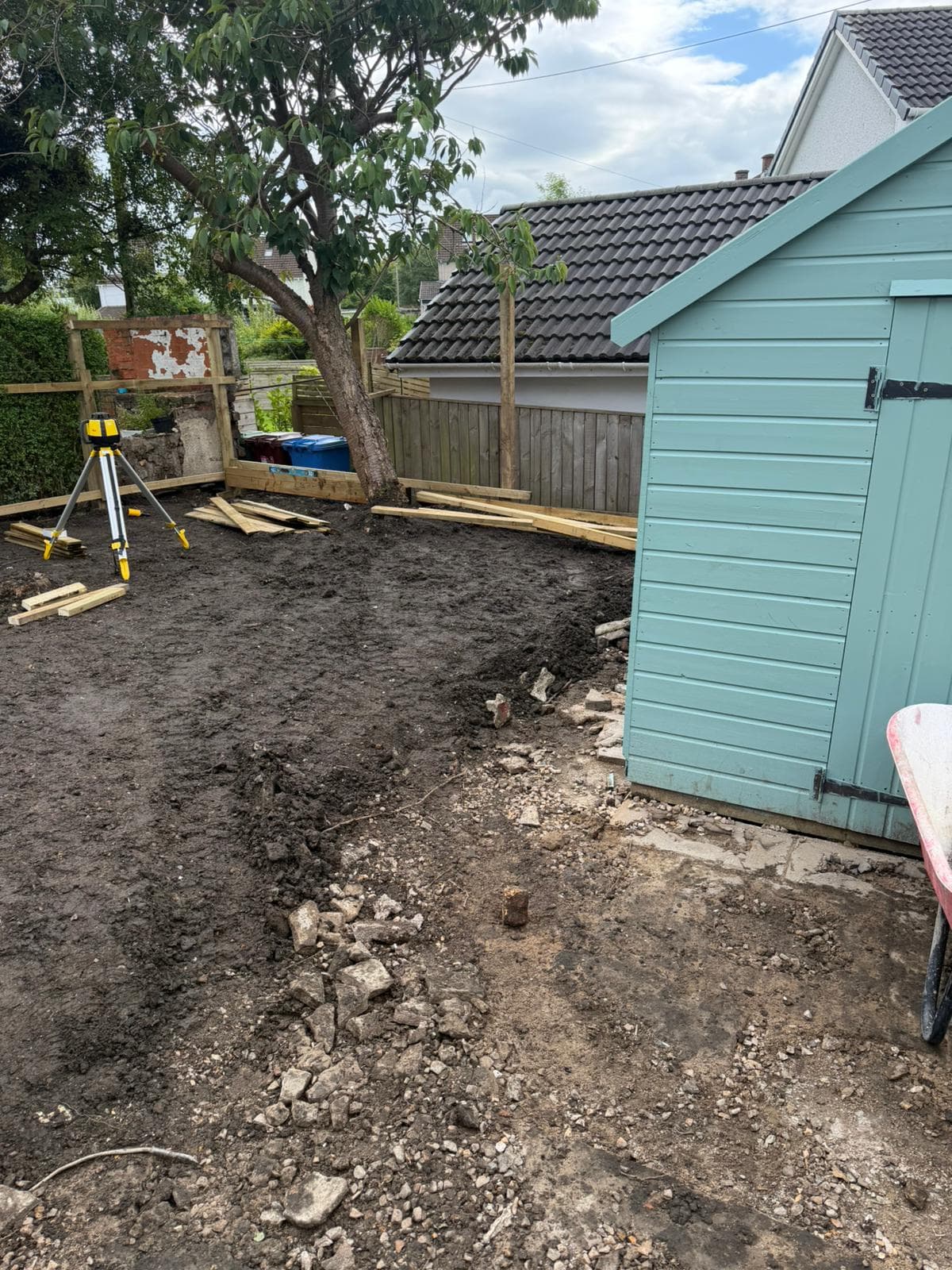
Glasgow gets somewhere in the region of 1,200mm of rain a year, spread across roughly 170 wet days. Add the boulder clay that sits under much of the west of Scotland and standing water is not an unusual problem here, it is the default condition of any garden that has not been set up to deal with it.
Work out the cause before buying a solution
Waterlogging looks the same whatever is causing it, but the fixes are not interchangeable. Four causes cover almost everything.
- Surface compaction. Water cannot get into the ground at all and sits on top. Common on new builds and anywhere machinery or heavy foot traffic has run.
- Impermeable subsoil. Water gets through the topsoil then stops dead at a clay layer, so the top 200mm behaves like a saucer.
- Levels running the wrong way. The garden, patio or driveway falls towards the house instead of away from it.
- Water arriving from elsewhere. A neighbouring slope, a broken downpipe or a blocked gully is delivering water your garden was never meant to absorb.
A quick test: dig a hole about 300mm deep, fill it with water and see how long it takes to drain. If it is gone within a couple of hours the ground is fine and your problem is levels or an external source. If it is still sitting there the next day, the issue is the soil profile itself.
The fixes, and what each one is for
Aeration and decompaction suit ground that is simply tight rather than genuinely impermeable, and it is the cheapest thing worth trying first on a lawn. A land drain or French drain, a gravel-filled trench with perforated pipe running to a suitable outfall, is the standard answer where water needs intercepting and taking somewhere. A soakaway is a pit or crate system that holds water and lets it disperse slowly, which works where there is permeable ground below the clay to disperse into and does very little where there is not.
Channel drains handle surface water off paving and driveways. And regrading is what you do when the real problem is that the ground is pointing the wrong way, which is more common than people expect, especially where an extension or a patio has been added over the years without anyone rechecking the falls.
Where it stops being a garden problem
If water is standing against the wall of the house, that moves up the priority list immediately. Persistent saturation at the base of a wall is how damp problems start, and it is worth dealing with before anything cosmetic. The same applies to water pooling around a shed base or under decking, where the consequence is rot rather than damp but the cause is identical.
Drainage is also the step that has to come before other work, not after. Laying a patio, a driveway or new turf over ground that floods just puts a nicer surface on the same problem. Sorting the water first is less visible and considerably cheaper than doing the job twice.
Gardens across Paisley, Johnstone and the low-lying parts of Erskine see this constantly. If yours is holding water, a site visit will establish which of the four causes you are actually dealing with.
Related services
Areas this applies to
Get a free quote
Tell us where you are and what the garden needs. Quotes are given after seeing the space, so the price reflects the actual job rather than a guess.
- Call
- 07766 636189
- Message on WhatsApp
- Opening hours
- Monday to Sunday, 8:00am – 4:00pm